
"ET coffee"
200 article(s) found

Columbia Coffee Story-to enhance Colombian coffee, Fnc calls for global solicitation
For more information on coffee beans, please follow Coffee Workshop (Wechat official account cafe_style) this public call aims to discover innovative proposals from entrepreneurs, research groups and / or companies to enhance the efficiency of selective coffee harvesting in Colombia. SharePrint September 06, 2017 08:29 ET | Source: Federacion

Introduction of Wote Information of Ethiopian washing treatment Plant _ characteristics of Coffee Flavor in Gedeo Micro-producing area
For more information on coffee beans, please follow the coffee workshop (Wechat official account cafe_style) WOTE KONGA MILL-YIRGACHEFFE WORDEA, a private washing plant in Yirgacheffe, southern Ethiopia. Coffee grows in the Gedeo micro-producing area of Yigracheffe, of which Yirgacheffe is the most complex and rich.

Coffee bean baking software Artisan records baking curve
Artisan is a software that helps coffee roasters record the temperature curve of the roasting process, as well as analyze and control the quality of coffee roasting through Artisan. By connecting the computer to a temperature recorder or PID controller (proportional-integral-differential controller), Artisan can automatically create baking curves to help bakers make decisions to change the final coffee style.

Chemical reaction and temperature during coffee roasting changes of reactive substances in coffee roasting process
Professional coffee knowledge exchange more coffee bean information please follow the coffee workshop (Wechat official account cafe_style) professional coffee roasting | coffee roasting is too complicated? A picture teaches you how the baking process reacts to the chemical composition of the baking. Sucrose: melting point 187.8 ℃-sugar? Complex = caramelization-water CO2 escapes to produce an explosive First Crack phenomenon. I'm in the roaster.

The following iced coffee is recommended to you in the heat of summer.
Black and white iced coffee Iced au lait blanc et noir is full of infinite elegance, lovely sweet like a mature face. A watershed drink that looks beautiful on the outside. Change the amount of coffee and milk to find out what ratio you like. Fill the cup with water and add syrup. Pour in the milk and stir gently. Quietly inject from it.

How about Harald Harar coffee in the coffee growing area of Ethiopia? Harald Harar Coffee
Professional Coffee knowledge Exchange for more information on coffee beans please follow Coffee Workshop (Wechat official account cafe_style) Harrar-also spelled as Harar- including the easternmost coffee growing area of Ethiopia. It is subdivided into four smaller regions: East Harar, West Hara, Bell and Arsi. Harrar stretches through the vast desert to the border, and to the east is Soma
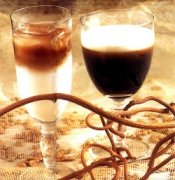
The method of making two kinds of iced coffee
Black and white iced coffee Iced au lait blanc et noir looks like a beautiful watershed drink. Change the amount of coffee and milk to find out what ratio you like. The slightly sweet taste of coffee and milk makes a nostalgic iced coffee. If you want to perform more handsomely, try injecting it into a champagne glass. Please be sure to try. In the cup

The basic chemical reaction of coffee knowledge during coffee roasting.
Many thermal and chemical reactions take place during baking: decarbonation, dehydration of quinic acid, subdivision, isomerization, polymerization, and complex sugar reactions (caramelization). The main components of the thermal reaction are monosaccharides and sucrose, chlorogenic acid, free amino acids, and fenugreek amide. Both aravinose and calactose in the polysaccharides are transferred, and the basic vulcanization process includes hydroxylamine.

Temperature curve of Starbucks concentrated roasted coffee beans
The temperature curve of Starbucks concentrated roasted coffee beans is the TG-DTG curve under air atmosphere and 10 ℃ min-1 heating rate, which is similar to the biomass combustion model proposed by Min Fanfei et al. (2005). The TG curve is the curve of the relationship between weight and temperature, while the DTG curve is obtained from the derivative of TG curve to time, which represents the rate of change of weight with time. As can be seen from the TG curve in figure 1, coffee

Introduction to coffee roasting training-basic chemical reactions in the coffee roasting process
Professional coffee knowledge exchange more coffee bean information please follow the coffee workshop (Wechat official account cafe_style) Coffee roasting skills Collection | the purpose of coffee roasting and the characteristics of coffee beans except in the home-barista.com forum, the word MET is rarely seen. MET is not a number, but the most time segment in the whole baking process.
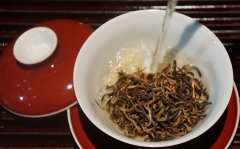
Song species Huangzhixiang Dancong Oolong is better to brew tea with soft water or hard water? Why is it good to drink?
Instead of using a panel of experts, a US study used a large group of typical tea consumers to determine the effects of the chemical composition of water on tea making (Franks et al. 2019). The result is basically the same as the previous study: soft water can extract more catechins, and it has a good effect on catechin.

The production method of two kinds of iced coffee black and white iced coffee
Black and white iced coffee Iced au lait blanc et noir looks like a beautiful watershed drink. Change the amount of coffee and milk to find out what ratio you like. The slightly sweet taste of coffee and milk makes a nostalgic iced coffee. If you want to perform more handsomely, try injecting it into a champagne glass. Please be sure to try. In the cup
Basic chemical reactions that occur during coffee roasting
Many thermal and chemical reactions take place during baking: decarbonation, dehydration of quinic acid, fragmentation, isomerization, polymerization, and complex sugar reactions (caramelization). The main thermally reactive components are monosaccharides and sucrose, chlorogenic acid, displaced amino acids, and trigonelline amide. Both aravinone and calactose in polysaccharides are transferred, and basic sulfurization contains hydroxyamino acids.

Knowledge of coffee roasting development [2] Coffee roasting process coffee roasting development time ratio
Professional coffee knowledge exchange more coffee bean information please follow the coffee workshop (Wechat official account cafe_style), and the way of baking can be simply divided into two ways: firepower and hot air. Different baking degrees will also bring different tastes, and this is the most interesting part of baking. In addition to baking, professional baristas are more concerned about how well the baked beans should be ripe.
The basic chemical reaction of coffee roasting process
Many thermal and chemical reactions take place during baking: decarbonation, dehydration of quinic acid, subdivision, isomerization, polymerization, and complex sugar reactions (caramelization). The main components of the thermal reaction are monosaccharides and sucrose, chlorogenic acid, free amino acids, and fenugreek amide. Both aravinose and calactose in the polysaccharides are transferred, and the basic vulcanization contains hydroxylated amino acid.
The basic chemical reaction that takes place during coffee roasting.
Many thermal and chemical reactions take place during baking: decarbonation, dehydration of quinic acid, subdivision, isomerization, polymerization, and complex sugar reactions (caramelization). The main components of the thermal reaction are monosaccharides and sucrose, chlorogenic acid, free amino acids, and fenugreek amide. Both aravinose and calactose in the polysaccharides are transferred, and the basic vulcanization process includes hydroxylamine.

The basic chemical reactions that take place during coffee roasting
Many thermal and chemical reactions take place during baking: decarbonation, dehydration of quinic acid, subdivision, isomerization, polymerization, and complex sugar reactions (caramelization). The main components of the thermal reaction are monosaccharides and sucrose, chlorogenic acid, free amino acids, and fenugreek amide. Both aravinose and calactose in the polysaccharides are transferred, and the basic vulcanization process includes hydroxylamine.

Basic chemical reactions of coffee beans during coffee roasting
Many thermal and chemical reactions take place during baking: decarbonation, dehydration of quinic acid, subdivision, isomerization, polymerization, and complex sugar reactions (caramelization). The main components of the thermal reaction are monosaccharides and sucrose, chlorogenic acid, free amino acids, and fenugreek amide. Both aravinose and calactose in the polysaccharides are transferred, and the basic vulcanization process includes hydroxylamine.

The basic chemical reactions that take place during coffee roasting
Many thermal and chemical reactions take place during baking: decarbonation, dehydration of quinic acid, subdivision, isomerization, polymerization, and complex sugar reactions (caramelization). The main components of the thermal reaction are monosaccharides and sucrose, chlorogenic acid, free amino acids, and fenugreek amide. Both aravinose and calactose in the polysaccharides are transferred, and the basic vulcanization process includes hydroxylamine.